
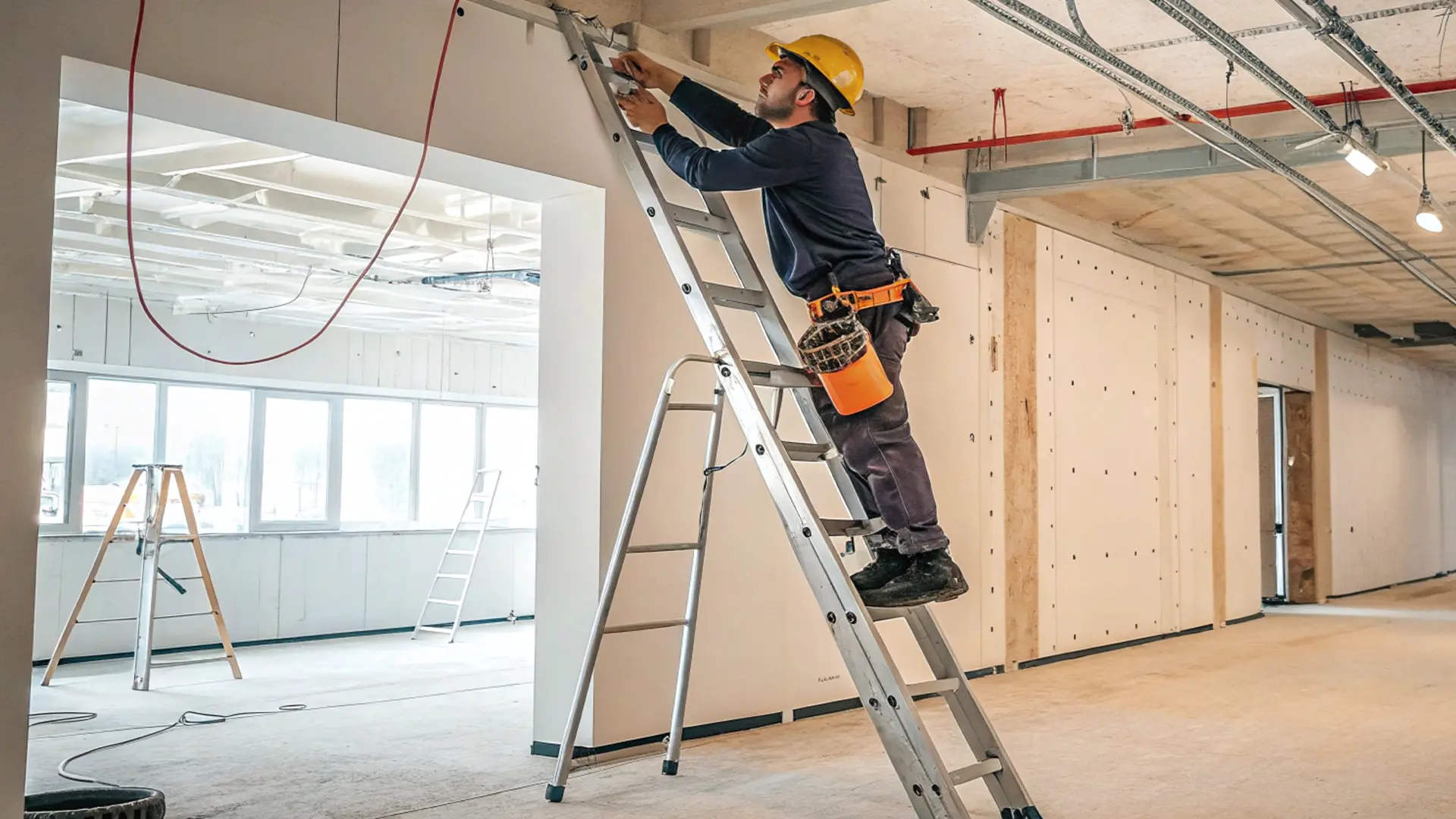
Internal partition is the structural or partitioning element that separates rooms within a single storey of a building. Its function is to delineate the functional layout of the interior and to provide acoustic privacy. Load-bearing walls also have another important function - they transfer part of the load from the ceiling or roof structure.
In timber-frame houses, the internal partitions are usually of sandwich construction. They consist of a wooden grid, an insulating filling (usually mineral or cellulose wool) and plasterboard sheathing on both sides, Fermacell or OSB. This design achieves good sound insulation with low wall thickness and low dead weight.
Additionally internal partitions allow easy routing of electrical and sanitary installations inside the structural layer. Their nature does not require forging or interference with the building structure. Depending on the function of the rooms and the client's requirements, the internal partitions can be load-bearing or non-load-bearing. Their parameters, such as thickness, arrangement of layers and type of cladding, are adapted to the acoustic, fire protection and installation requirements.


