
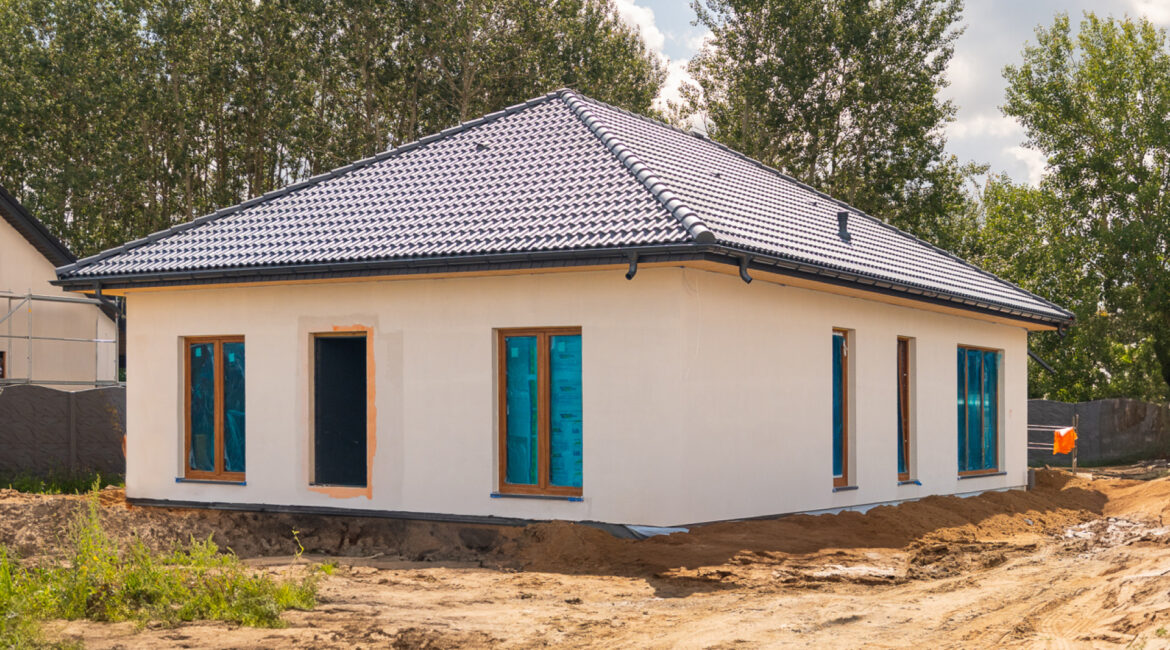
Modular homes for year-round use and holiday homes can be built using very similar construction methods, but they are designed with different uses in mind. The difference does not lie in the frame structure, but covers, amongst other things, thermal parameters, ventilation solutions, the construction of partitions and the preparation of the building for day-to-day use throughout the year.
Thermal insulation and comfort
All-year-round modular homes They are designed to ensure comfortable conditions both in winter and during the summer heat. Adequate insulation of the walls, roof and floor not only affects heating costs, but also on the day-to-day lives of local residents.
The technology used by Wascovilla includes, amongst other things, C24 structural timber, cellulose insulation and wood fibre boards. Such solutions they help to minimise heat loss in winter and slow down the rate at which the room heats up rooms during periods of high temperatures.
Unlike year-round modular buildings, many holiday homes are designed primarily for seasonal use. Consequently, the level of thermal insulation is often tailored to less intensive use than in year-round buildings. However, this does not mean that every holiday home has low energy efficiency. It is also becoming increasingly common to see holiday home designs built using the same technology as that used for year-round homes.
The building’s design and the quality of its construction
A building intended for year-round use must withstand decades of daily use, so the quality of the material and the precision of the prefabrication are of greater importance here than a property that is only visited for a few months a year. With this in mind, at Wascovilla we use C24 structural timber that has been kiln-dried and planed on all four sides. Prefabrication takes place under controlled production conditions, which ensures a high level of precision in the manufacture of individual structural components.
In holiday homes, the range of solutions used depends mainly on the building’s intended use and the client’s expectations. Some of the structures are designed as lightweight buildings for occasional use, whilst others meet the standards of fully-fledged residential homes.
A diffusion-open wall and moisture removal
Building modular homes, we know how important it is to manage moisture within building partitions. Water vapour accumulating in walls can lead to a deterioration in the insulation’s performance and the gradual dampening of the structure.
At Wascovilla, we use diffusion-open walls. In other words, walls in which all the layers are selected so that water vapour can gradually migrate outwards rather than becoming trapped between the layers of the wall. In practice, this means dry insulation throughout the building’s entire life cycle, a lower risk of mould and a better indoor microclimate. These benefits really come into their own in a home that is used all year round, not just from June to August.
Ventilation and indoor air quality
In a building used all year round, regular air exchange protects both the health of the occupants and the building itself from excess damp. That is why modern prefabricated houses They are increasingly incorporating mechanical ventilation with heat recovery into their designs. Recuperation It removes moisture from rooms, improves air quality and reduces energy losses that would otherwise be caused by standard natural ventilation.
Choosing a ventilation system in leisure facilities This depends mainly on the standard of construction and how the building is used. However, traditional gravity ventilation is usually the preferred option, which is often sufficient given the seasonal nature of occupancy.
Foundations
The differences between a year-round modular home and a holiday home can also be seen below floor level. At Wascovilla, we build year-round homes built on a foundation slab, which reduces energy loss and helps maintain an even temperature distribution inside the building. The investment in the panel pays for itself through year-round use, when the house heats up and loses heat throughout the year, not just seasonally.
In some leisure facilities, simpler foundation solutions are used, tailored to the building’s less intensive use.
All-year-round and holiday modular homes – which to choose
The differences between a year-round home and a holiday home essentially boil down to one question. Is the building intended to accommodate your lifestyle all year round, or is it to serve as a base for a few months of the season? The answer to this question determines the choice of insulation, ventilation and foundations, and therefore also the cost and method of building a house.
If you’re planning to live in a year-round modular home whatever the season, please take a look at the Wascovilla catalogue. There you’ll find ready-made house projects designed specifically for continuous use.
Have you already a ready-made design for a year-round home from an external architectural practice? We also carry out such projects using modular technology. We adapt the documentation to the requirements of prefabrication, so you don’t have to abandon your chosen design in order to benefit from the advantages of modular construction.


