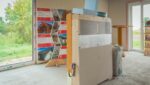
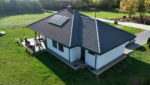
Modular construction is invariably gaining popularity in Poland. Shorter lead times, predictable costs and modern technology mean that more and more people are considering such an investment. With the possibility of building a facility such as modular house However, questions arise: how do banks approach the financing of prefabricated houses? or mortgage is it then easily accessible? If you want to know the answer to this question, read the text below!
Mortgage versus prefab - what do banks look out for?
When it comes to mortgages, the most important thing for financial institutions is to secure funds on a property that has a certain market value and durability. Until a dozen years ago modular house may have been questionable. Some banks treated it similarly to bungalowand not as a fully-fledged residential building. Today, the situation is changing in favour of modular housing.
If the structure is on a permanent foundation and meets the requirements of the building law, most banks will accept it as a standard property. This means that you can apply for a mortgage on a similar basis as for a brick house.
Challenges and formalities in obtaining a loan
Until recently, the most common difficulty with prefabricated houses was not the construction technology itself, but the stage of the loan tranches. Banks prefer to finance investments in stages, e.g. after the foundations have been laid, after the structure has been erected or when the shell is closed. In the case of a modular house, a large part of the cost falls on the moment when the prefabricated elements are ordered, before the finished building appears on the plot.
Today, an increasing number of borrowers are interested in the subject, which is financing modular homeshas slightly changed the banks' approach to this solution. Investors can count on the bank disbursing tranches in a way that is aligned with the modular construction schedule.
How to increase the chances of financing for a modular home?
Banks appreciate investments that are well documented and carried out in cooperation with a proven contractor.
- documentation - the more thoroughly prepared house design, cost and schedulethe easier it is for the bank to make a decision,
- contractor - a reputable company with experience in the construction of modular homes, such as Wascovilla, lends credibility to the investment,
- foundation - building (or financing) the foundation slab yourself can be a good bargaining chip when talking to a bank, as it reduces the risk at the initial construction stage.
Different paths for construction implementation in Wascovilla
At Wascovilla, we offer three variants that allow the scope of services to be tailored to the investor's expectations. You can choose to purchase the house structure alone and take care of the foundation and the building assembly yourself. Alternatively, you can choose to compromise on a structure with assembly, or you can take advantage of the full service - from the foundation slab to the handover of the finished house. This makes it easier to match modular house project not only to the budget and construction plan, but also to the formal requirements the bank may impose.
Modular house - lessons for future investors
Banks are looking more and more favourably at modular homes and are treating them on a par with traditional buildings, provided they meet building code requirements and have a foundation. The key to success is proper preparation of documents and advance scheduling of loan disbursements with a financial institution. For the investor, this means that the dream of a modern, prefabricated house does not have to conflict with mortgage financing.
Find out more about the possibilities building a modular house from Wascovilla and see how to fit the project into your own plans and financing. Call or write!