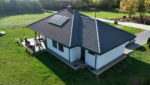
Cost of house construction This is only part of the expenses associated with the investment. Equally important are the running costs that arise in the subsequent years of the building's use. Modular house A timber-frame house and a brick house can be similar in terms of space and functionality, but their maintenance costs are not always the same.
Heating costs in a 10-year perspective
One of the biggest items in the running costs of a house is heating. Modular house with frame technology is usually designed as a building with very good energy performance.
The design of the walls allows for a thick layer of insulation and the building elements are built under controlled production conditions. This reduces the risk of execution errors. In practice, this translates into better thermal insulation of the building and lower energy requirements needed to heat the house.
Good energy performance can also be achieved with a brick house, but much depends on the construction technology and the quality of the workmanship. After about 10 years of use, even a small thermal bridges resulting from installation errors may translate into significant differences in the costs incurred for heating the building.
Base slab and heat loss
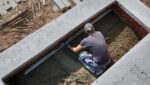
Our modular homes in frame technology are always built on a foundation slab. This solution provides both a foundation and a floor-on-ground structure. In practice, this allows for a continuous layer of insulation under the slab and along its perimeter. This reduces heat loss to the ground, which can be greater with traditional foundations.
Brick buildings often have classic footings and a floor on the ground made in several stages. This increases the number of places where heat loss can occur.
Over the many years of a building's life, the differences resulting from the use of a slab-on-grade or traditional foundations can have a significant impact on the energy requirements for heating the ground floor.
Installations and energy standard of the building
At running costs of the house The installations used are also highly influential. Today, the following are standard in new buildings heat pumps whether mechanical ventilation with heat recovery (recuperation).
Modular houses have been using such solutions for many years, whereas new technologies have not been implemented as readily in brick houses at the same time. Many of them used traditional heating systems such as gas or solid fuel boilers.
Therefore, when comparing running costs after 10 years, it is worth considering not only the construction of the building itself, but also the standard of the installations used at the time of construction.
Current building maintenance costs
The running costs of a house also include the ongoing maintenance of the building. This includes the façade, the window and door frames or the finishing touches. In practice, these expenses are largely similar in both a modular house and a brick house.
Typical works carried out during the life of a building include:
- refreshing the façade or renewing the protective layers on the building's exterior,
- maintenance of window and door joinery,
- periodic inspection of technical installations,
- service of heating and ventilation equipment.
The costs of such works are primarily due to the natural wear and tear of materials and the need to keep the installation in good working order. In this respect house building technology is less important than the quality of the materials used and the way the building is used.
Modular vs. brick house - running costs
After a house has been in use for about 10 years, it is already relatively easy to assess the actual maintenance costs. In practice, the most significant factors are:
- energy consumption for heating the building,
- installations used,
- the quality of construction of the building envelope.
Wascovilla modular homes We manufacture using timber-frame technology. The prefabricated elements fit together well, reducing heat loss and eliminating many potential installation errors.
In the case of a masonry house, much depends on the quality of the workmanship. If the work on the construction site is carried out carelessly, thermal bridges and other problems arise, which can generate high running costs, even with energy-saving technologies.