
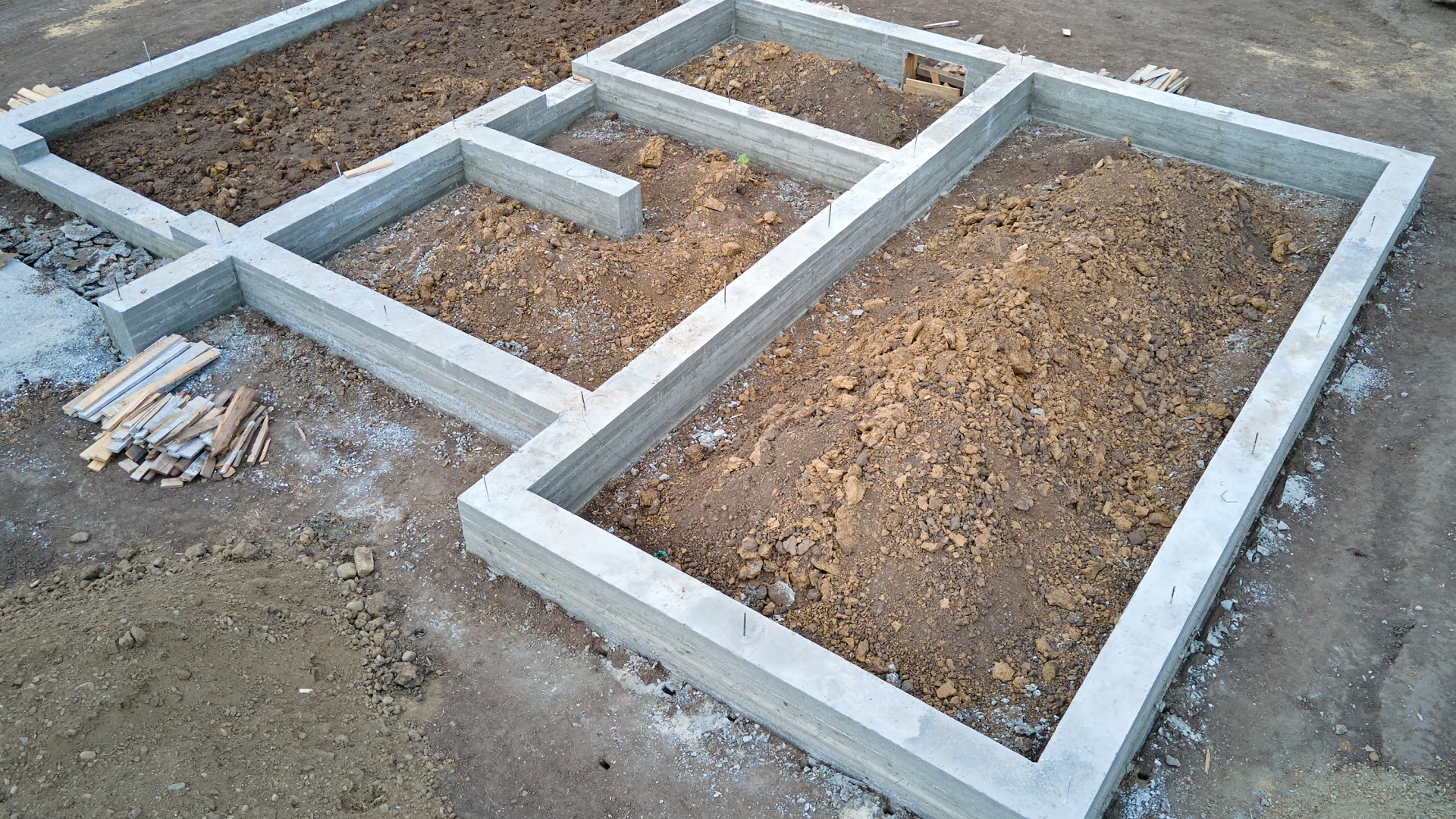
The ground-up stage is the first stage of building a house, which involves preparing the site and laying the foundations. Once this stage is complete, the building does not yet have any walls or a roof, but it does have a foundation in place on which the structure will be built.
Work usually begins with marking out the building on the plot and preparing the site. This is followed by excavation work and the laying of foundations, such as strip footings or foundation slab. At this stage, the necessary insulation and service components that need to be installed beneath the foundations or the floor are also put in place.
Why is the ground level so important? The stability of a building depends on the foundations being laid correctly. Any mistakes made at this stage can be difficult and costly to rectify once the house has been built.
In the case of prefabricated houses, such as those built by Wascovill, the preparation of the foundations is particularly important. The prefabricated structural elements must be installed on a base that is of the correct dimensions and level. Therefore, the precision with which the foundation slab is constructed affects the progress of subsequent work.
It is worth bearing in mind that the scope of the ‘zero-stage’ may vary depending on the contractor and the contract. Before work begins, you should check whether the quote for building the house includes all earthworks, foundations, insulation and the necessary service ducts.


