
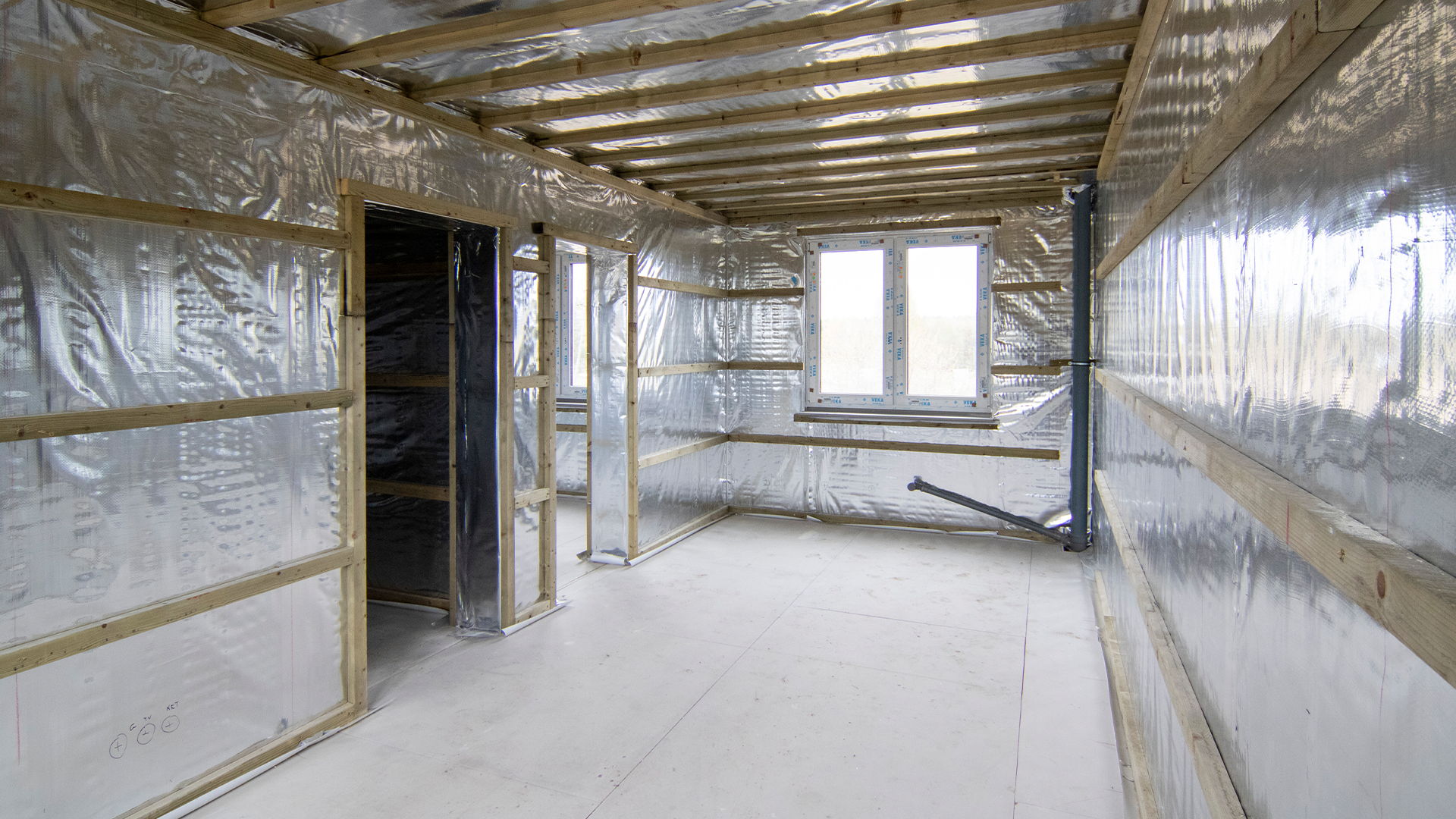
Thermal insulation It is a layer of material, or a combination of materials, used in construction to limit the flow of heat between the interior of a building and its surroundings. Its main purpose is to maintain a suitable temperature inside the building – minimising heat loss in winter and limiting the building’s heating up in summer.
It helps to increase energy efficiency of the building, which leads to lower heating and cooling costs, as well as improved comfort for occupants. Insulation materials are usually mineral wool, cellulose wool, polystyrene, polyurethane foam or insulation boards (e.g. STEICO facade boards).
Thermal insulation in a timber-frame house
In timber-frame construction, thermal insulation is installed, amongst other places, between the components of the timber frame. However, the effectiveness of the entire partition is determined not only by insulation parameters, but also the arrangement of its layers and the maintenance of their continuity.
Areas where the continuity of the insulation is interrupted or its thickness is reduced may encourage the formation of thermal bridges. For this reason thermal properties of a house should be assessed for the entire partition, rather than solely on the basis of the parameters of the insulation material used.


