
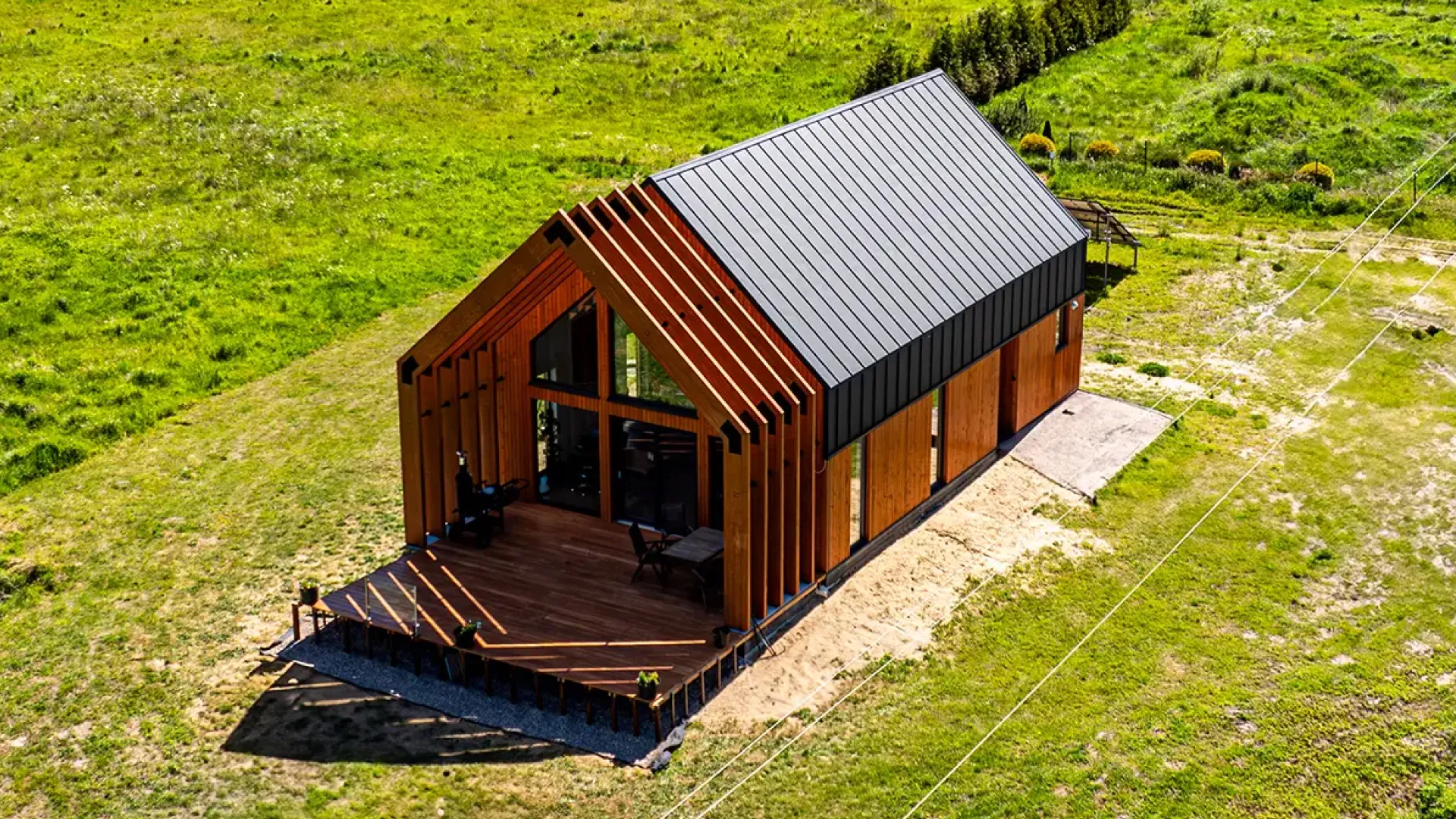
The building’s orientation in relation to the cardinal points This refers to the positioning of a house or other building in relation to the cardinal directions. This decision affects the amount of natural light, the comfort of use, and the building’s heating and cooling costs. Designers analyse the orientation as early as the stage of planning the layout of rooms and the placement of windows. Living areas are usually situated on the south or south-west side, where the most sunlight reaches. Bedrooms and utility rooms are often situated on the north or east side. The correct positioning of a building can improve energy efficiency and reduce energy consumption.
Orientation also affects the performance of photovoltaic systems and the risk of interiors overheating in summer. In practice, the following factors are also important: the layout of the plot, neighbouring buildings and local climatic conditions. A well-considered orientation of the building in relation to the cardinal points allows for better use of the natural surroundings and enhances the comfort of everyday use.


